For Christmas I got season 1 of the TV show Once Upon a Time. The first thing I watched was the bonus features, because I love seeing how these things are made. What stuck out to me was how many times the writers of the show said "we wondered what would happen if" or "this path was obvious, so we asked ourselves what if..."
The biggest thing to me is when they were talking about Prince Charming's back story. They knew everyone would expect to know his story--the royal prince with a rich father who would take Snow White away. So they asked "What if that wasn't his story? What if he was actually a pauper?" From this simple realization that the story would be more interesting with Charming having a different back story, the show has a whole other plot to go into with the conflicts of becoming a prince without having been raised as one.
As I've been plotting my next book, I've asked myself these same questions. What would the audience expect to happen from this? If it's something good--like the heroine winning, then I don't touch it. But who's expected to be the bad guy? The good guy? What cliches are in this genre that I want to avoid? Then from this, asking "what if this happened?" Sometimes it's awful. But sometimes it's good. And I've found that things are a lot less predictable and a lot more interesting.
Do you have any tricks for plotting your story?

Showing posts with label writing. Show all posts
Showing posts with label writing. Show all posts
Thursday, January 3, 2013


Tuesday, October 23, 2012
New Writing Routine
So I've come to my final year of college (yeah, weird) and for my honors thesis, I'm writing a book! I almost feel professional (minus the agent, book deal, editor, and all that stuff) because for the first time, I have a real deadline for a full book. I started off the year determined to do well in this.
But home is distracting! Friends coming over, roommates doing fun stuff, social media, you know the temptations. Now I've buckled down.
I set a word goal for the day, and I don't leave campus until that is complete.
This works for me because I like home. It's warm and there's food and it's a place to rest after a long day of classes and work. But by staying on campus, I'm still in the mindset of work mode. I have to keep typing until I hit that word count, and only then can I eat food and play around on facebook and start my other homework.
It's nice, here though. One of the buildings has comfy chairs with foot stools, an outlet, and no distraction from the strangers around me. It's working out great and I've gotten to my word goal every day so far!
What do you do to keep distractions at bay while writing?
But home is distracting! Friends coming over, roommates doing fun stuff, social media, you know the temptations. Now I've buckled down.
I set a word goal for the day, and I don't leave campus until that is complete.
This works for me because I like home. It's warm and there's food and it's a place to rest after a long day of classes and work. But by staying on campus, I'm still in the mindset of work mode. I have to keep typing until I hit that word count, and only then can I eat food and play around on facebook and start my other homework.
It's nice, here though. One of the buildings has comfy chairs with foot stools, an outlet, and no distraction from the strangers around me. It's working out great and I've gotten to my word goal every day so far!
What do you do to keep distractions at bay while writing?
Thursday, May 31, 2012
Blog changes and sucking.
First, have you entered my 200 follower giveaway yet? You should!
And yes, I have changed my blog's URL. When I first started the blog, I thought the title of your blog was supposed to be your URL also. Turns out it doesn't have to. And after thinking about it, I wanted my name in my blog URL. Of course, getting anything just plain Jenna Cooper is impossible, despite my childhood belief that NO ONE ELSE IN THE WORLD IS NAMED JENNA (this was pre-Bush administration, and involves my siblings, a haircut store, and stickers). Anyway. So, voila, I now have jennacooperthewriter.blogspot.com. There may be other Jenna Coopers, but I am the only writer (maybe).
And I feel like sharing this video right now, because I also need this one. It's from the time when Maureen Johnson stepped in for John Green for the vlogbrother videos when he was on paternity leave. Basically: it's ok to suck.
And yes, I have changed my blog's URL. When I first started the blog, I thought the title of your blog was supposed to be your URL also. Turns out it doesn't have to. And after thinking about it, I wanted my name in my blog URL. Of course, getting anything just plain Jenna Cooper is impossible, despite my childhood belief that NO ONE ELSE IN THE WORLD IS NAMED JENNA (this was pre-Bush administration, and involves my siblings, a haircut store, and stickers). Anyway. So, voila, I now have jennacooperthewriter.blogspot.com. There may be other Jenna Coopers, but I am the only writer (maybe).
And I feel like sharing this video right now, because I also need this one. It's from the time when Maureen Johnson stepped in for John Green for the vlogbrother videos when he was on paternity leave. Basically: it's ok to suck.
Thursday, February 2, 2012
Emotion
In my writing class, we talked about emotion a few class periods ago. How we accomplish making our reader, our characters, even ourselves feel.
I think that emotion can be one of the hardest parts for writers to accomplish, and it's the most important. All of the books that you read over and over again, that leave you anticipating for the sequel, crying when the series is over, it's all from the emotional tie you as a reader have to the book. There's a lot that comes into play with this, characters and plot, mainly, but the actual writing itself can be the most difficult. You don't want to sound too emo or sappy or hateful.
So as I questioned how we as writers can do this, I thought about music. Generally speaking, the lyrics that move us the most aren't overly emo or sappy or hateful (at least, for me they're not). Just look at these lyrics:
From Where You Are by Lifehouse
"I miss the years that were erased
I miss the way the sunshine would light up your face
I miss all the little things
I never thought they'd mean everything to me
Yeah I miss you
And I wish you were here"
This set of lyrics gives us a specific image by saying "I miss the way the sunshine would light up your face." You can see it. You can see a loved one's face tilted up to the sun, a smile, the happy feeling that's now been taken away. The absence of that happy feeling is what makes it hurt the most. These lyrics are so simply stated they make a big impact. There's no great metaphor for how he feels life is a black hole and there's no more joy in his life. It just simply says "I miss you and I wish you were here." How much more powerful is this than a hyperbole of depression?
Now, when I write emotion, I try to think of a great song that makes me feel in a similar way. Getting down to the sentence-level I've found has really helped me.
How do you try to bring out emotion in your reader?
I think that emotion can be one of the hardest parts for writers to accomplish, and it's the most important. All of the books that you read over and over again, that leave you anticipating for the sequel, crying when the series is over, it's all from the emotional tie you as a reader have to the book. There's a lot that comes into play with this, characters and plot, mainly, but the actual writing itself can be the most difficult. You don't want to sound too emo or sappy or hateful.
So as I questioned how we as writers can do this, I thought about music. Generally speaking, the lyrics that move us the most aren't overly emo or sappy or hateful (at least, for me they're not). Just look at these lyrics:
From Where You Are by Lifehouse
"I miss the years that were erased
I miss the way the sunshine would light up your face
I miss all the little things
I never thought they'd mean everything to me
Yeah I miss you
And I wish you were here"
This set of lyrics gives us a specific image by saying "I miss the way the sunshine would light up your face." You can see it. You can see a loved one's face tilted up to the sun, a smile, the happy feeling that's now been taken away. The absence of that happy feeling is what makes it hurt the most. These lyrics are so simply stated they make a big impact. There's no great metaphor for how he feels life is a black hole and there's no more joy in his life. It just simply says "I miss you and I wish you were here." How much more powerful is this than a hyperbole of depression?
Now, when I write emotion, I try to think of a great song that makes me feel in a similar way. Getting down to the sentence-level I've found has really helped me.
How do you try to bring out emotion in your reader?
Thursday, December 22, 2011
I have a childish habit
I've been writing forever. Or at least what my nineteen years feels like forever is (which, to some people like my mother, isn't so long to them). But, for as long as I've had the ability to put pencil to paper and form words, I've written. And so of course, as a kid, I didn't know proper terms like manuscript. I just wrote stories, that's what I called them, that's what everyone else called them.
Now, ten years later, and I still fight back to write or say "story" when I refer to my own work. But I'd rather say "my story" instead of "my book" or "my manuscript." I don't know what it is. I want to be grown-up and professional, out of my self-illustrated cover and table of contents smudged in pencil and into real shiny covers and formatting. But I can't let go of my stories. Maybe it's habit, and maybe it's something else. Maybe it's holding on to the excitement and thrill I got as a kid writing down the people and places in my head. It may also be that I've always focused on the actual story and not the writing (which, of course I learned a few years ago is actually important).
Now that this is out in the open I just might keep on referring to FORGET ME NOT as my story. Because despite everything I know now, it's really that child-like excitement that keeps me writing.
(And for kicks, here's a picture from my childhood)
Now, ten years later, and I still fight back to write or say "story" when I refer to my own work. But I'd rather say "my story" instead of "my book" or "my manuscript." I don't know what it is. I want to be grown-up and professional, out of my self-illustrated cover and table of contents smudged in pencil and into real shiny covers and formatting. But I can't let go of my stories. Maybe it's habit, and maybe it's something else. Maybe it's holding on to the excitement and thrill I got as a kid writing down the people and places in my head. It may also be that I've always focused on the actual story and not the writing (which, of course I learned a few years ago is actually important).
Now that this is out in the open I just might keep on referring to FORGET ME NOT as my story. Because despite everything I know now, it's really that child-like excitement that keeps me writing.
(And for kicks, here's a picture from my childhood)
 |
| Me and my brothers. First day of 3rd grade for me. |
Tuesday, November 22, 2011
Somebody Has a Gun
I've read a book somewhat recently that I feel sort of takes Michael's stance on action. It's like the author was thinking, "Well, as long as things are blowing up and people are fighting, that'll make my book interesting!"
I wish sometimes authors (and screenwriters and anyone making a story) could see that they're pulling a Michael here. Now, obviously there needs to be action, and for some stories it's appropriate to have guns and that type of action. People have guns in TV shows and movies because it is exciting, like Michael said. But Michael fails to realize that usually before the big fight that he wants to emulate in his improv class, there's character development and conflict and mystery. They may start out with a big scene, but then it peters out and we get the plot. Bursts of action may come in the middle, but sandwiched between those there's other crucial elements that make a story interesting and worth reading/watching.
But really, seeing/reading anything that just seems to down on the action without incorporating other elements can just be tiring. This may be more of a jab toward action movies than books, but this is something we can all fall into and I've been thinking about.
Thursday, September 22, 2011
He's tall, dark, and...
Open up a book and read the description of the male lead.
Let me take a guess: he's tall, muscular, handsome, and with piercing eyes that can see through the heroine's soul. He could be dark complexioned, or a golden boy. But either way, just one stare at him makes the heroine melt into a puddle because he is so freaking hot.
Nothing really is wrong with having a handsome male lead, it's something that's been done since storytelling began. But maybe, just maybe, it's time to be different.
Let me introduce you to a few people:
 It's a beast! He's got fangs, razor sharp ones!
How many of us watched Beauty and the Beast and fell in love with this guy? He's tall, sure, and muscular, and maybe his eyes make Belle weak in the knees (it is what makes her realize it's him when he transforms), but the rest of him...not your typical lead. Of course he turns into the handsome prince at the end, but we and Belle fell in love with him before all of that.
 A face which earned a mother's fear and loathing.
Now, for the record, I thought Christine made the right choice by going with Raoul, but I'm in the minority. I think most people fell for the Phantom in the musical. You can have an deformed murderer for a male lead and presented correctly with a heart-wrenching backstory, and people will love him.
There's the less-attractive side, but what about the average guy?
 "Medium height, stocky build, ashy blonde hair that falls in waves over his forehead...you can see his struggle to remain emotionless, but his blue eyes show the alarm I've seen so often in prey." The Hunger Games, pages 25-26, US hardback edition.
That's right. Peeta Mellark.
Notice Katniss doesn't say he has the face that belongs to a god, or even that Peeta's handsome. Knowing Katniss' character, it's no secret she doesn't really think about boys much. But that doesn't mean she's oblivious. She notes that Gale is handsome, and that Finnick is undeniably good-looking. Other characters also point out that these two are handsome. Peeta? The closest we get is at the end of The Hunger Games **spoiler**when they come out for their interviews and she says he looks "so clean and healthy and beautiful" (page 361). But at that point, they've gone through the Games together and he was practically dead. The sight of him well and whole was probably what tipped her over to this description, because we never get it again, not in the other two books or anywhere in the first. **end spoiler**
So Peeta isn't a Phantom, nor is he an Edward Cullen. He's Peeta, your average baker's son. But guess what? People love Peeta. He's one of the most popular male leads in YA right now. He didn't get there by having an angelic face and a Michelangelo body. He got there from his personality.
Some other male leads of note that don't fall in the gorgeous category: David from Uglies and Four from Divergent. I love both of these guys, and a lot of other readers do, too. And the MC's they win over don't spend half of their thoughts obsessing over how hot they are.
So, all in all: personality trumps looks. It's okay to make your male lead ugly, average, or handsome. Just give him something for your heroine and readers to love regardless of his looks. And if your male lead falls into the super-mega-foxy-awesome-hawt category, don't obsess over how gorgeous he is. Readers will get it the first time around.
Let me take a guess: he's tall, muscular, handsome, and with piercing eyes that can see through the heroine's soul. He could be dark complexioned, or a golden boy. But either way, just one stare at him makes the heroine melt into a puddle because he is so freaking hot.
Nothing really is wrong with having a handsome male lead, it's something that's been done since storytelling began. But maybe, just maybe, it's time to be different.
Let me introduce you to a few people:

How many of us watched Beauty and the Beast and fell in love with this guy? He's tall, sure, and muscular, and maybe his eyes make Belle weak in the knees (it is what makes her realize it's him when he transforms), but the rest of him...not your typical lead. Of course he turns into the handsome prince at the end, but we and Belle fell in love with him before all of that.
Now, for the record, I thought Christine made the right choice by going with Raoul, but I'm in the minority. I think most people fell for the Phantom in the musical. You can have an deformed murderer for a male lead and presented correctly with a heart-wrenching backstory, and people will love him.
There's the less-attractive side, but what about the average guy?

That's right. Peeta Mellark.
Notice Katniss doesn't say he has the face that belongs to a god, or even that Peeta's handsome. Knowing Katniss' character, it's no secret she doesn't really think about boys much. But that doesn't mean she's oblivious. She notes that Gale is handsome, and that Finnick is undeniably good-looking. Other characters also point out that these two are handsome. Peeta? The closest we get is at the end of The Hunger Games **spoiler**when they come out for their interviews and she says he looks "so clean and healthy and beautiful" (page 361). But at that point, they've gone through the Games together and he was practically dead. The sight of him well and whole was probably what tipped her over to this description, because we never get it again, not in the other two books or anywhere in the first. **end spoiler**
So Peeta isn't a Phantom, nor is he an Edward Cullen. He's Peeta, your average baker's son. But guess what? People love Peeta. He's one of the most popular male leads in YA right now. He didn't get there by having an angelic face and a Michelangelo body. He got there from his personality.
Some other male leads of note that don't fall in the gorgeous category: David from Uglies and Four from Divergent. I love both of these guys, and a lot of other readers do, too. And the MC's they win over don't spend half of their thoughts obsessing over how hot they are.
So, all in all: personality trumps looks. It's okay to make your male lead ugly, average, or handsome. Just give him something for your heroine and readers to love regardless of his looks. And if your male lead falls into the super-mega-foxy-awesome-hawt category, don't obsess over how gorgeous he is. Readers will get it the first time around.
Thursday, September 15, 2011
Those little things you never notice
In case you couldn't tell by a lot of "My Top Tens," I love Jane Austen to pieces. If anyone says anything negative about her I pounce to her defense. And my all-time favorite book of hers is Persuasion. I've read it four times, seen both versions of the movie at least once, and even studied it in a British Literature class last winter.
Now I'm taking a class on writing literary criticism. So of course we need a book to read so that we can criticize it. And what does my professor choose, but Persuasion. Not only one of my favorite books, but I also already own a copy with notes in it. Score!
Last week we started talking about it (if you haven't read it: Anne broke her engagement with Wentworth, who later became rich and a captain in the navy. Due to various circumstances the two are thrown back in the same social circle, where he has the eye of all the ladies especially the Musgrove sisters, Louisa and Henrietta). My professor was lecturing, and talked about the first dinner scene when Captain Wentworth comes back. In it, he describes his first ship, the Asp, as "worn out and broken up...hardly fit for service." He doesn't have very nice things to say about the Asp. His brother-in-law, Admiral Croft, and his sister chastise him, saying how amazing the ship was and how many would have loved to command her. Then they talk a bit about Captain Wentworth's time with his ship the Laconia.
Now, I've read this scene over a lot. And many of you who have read it probably didn't notice the parallels. Anne (the Asp) was Captain Wentworth's first. In his return, Louisa Musgrove (the Laconia) becomes his new interest. This scene is in parallel to Captain Wentworth's career and love life. It's so simple, for the Asp and Anne, the Laconia and Louisa. But I'd never even noticed it.
Do you like to put little parallels and connections in your writing? Have you noticed any in a book you've read?
Now I'm taking a class on writing literary criticism. So of course we need a book to read so that we can criticize it. And what does my professor choose, but Persuasion. Not only one of my favorite books, but I also already own a copy with notes in it. Score!
Last week we started talking about it (if you haven't read it: Anne broke her engagement with Wentworth, who later became rich and a captain in the navy. Due to various circumstances the two are thrown back in the same social circle, where he has the eye of all the ladies especially the Musgrove sisters, Louisa and Henrietta). My professor was lecturing, and talked about the first dinner scene when Captain Wentworth comes back. In it, he describes his first ship, the Asp, as "worn out and broken up...hardly fit for service." He doesn't have very nice things to say about the Asp. His brother-in-law, Admiral Croft, and his sister chastise him, saying how amazing the ship was and how many would have loved to command her. Then they talk a bit about Captain Wentworth's time with his ship the Laconia.
Now, I've read this scene over a lot. And many of you who have read it probably didn't notice the parallels. Anne (the Asp) was Captain Wentworth's first. In his return, Louisa Musgrove (the Laconia) becomes his new interest. This scene is in parallel to Captain Wentworth's career and love life. It's so simple, for the Asp and Anne, the Laconia and Louisa. But I'd never even noticed it.
Do you like to put little parallels and connections in your writing? Have you noticed any in a book you've read?
Tuesday, September 13, 2011
My kind of adrenaline rush
Getting back to school has been hectic. It's been almost impossible to find time to write, but on top of that, I've been getting blockage.
Ugh. The bane of the writer's world.
But a few days ago my groove came back. Personally, I think that's the best feeling in the world (or at least up there with stuff like love and all that). To be so totally stuck, to be near giving up, and then coming back and having your fingers fly across the keyboard with all of the words coming out of you. It's exhilarating and my kind of adrenaline rush.
So I keep marching on, completing my WIP slowly but surely, with halts and speeding starts and lots of speed bumps. It's a crazy journey for never even leaving my room.
Ugh. The bane of the writer's world.
But a few days ago my groove came back. Personally, I think that's the best feeling in the world (or at least up there with stuff like love and all that). To be so totally stuck, to be near giving up, and then coming back and having your fingers fly across the keyboard with all of the words coming out of you. It's exhilarating and my kind of adrenaline rush.
So I keep marching on, completing my WIP slowly but surely, with halts and speeding starts and lots of speed bumps. It's a crazy journey for never even leaving my room.
Tuesday, August 23, 2011
Music for Writing
I'm not talking about music that reminds you of your book, or music you listen to while writing. Sometimes, hearing a song just reminds me of what I'm feeling about my writing. These are the songs for me, not my book or characters or setting. Just for me.
The fabulous Regina Spektor's song Eet reminds me of those times I'm in despair and wondering why the heck am I doing this again?
A song that always reminds why it is that I write is Unwritten by Natasha Bedingfield.
And if I ever feel like just giving up, Josh Groban's You Are Loved always puts me in a better mood.
Do you have any "you" songs for writing, or life, that you feel are just meant for you?
The fabulous Regina Spektor's song Eet reminds me of those times I'm in despair and wondering why the heck am I doing this again?
A song that always reminds why it is that I write is Unwritten by Natasha Bedingfield.
And if I ever feel like just giving up, Josh Groban's You Are Loved always puts me in a better mood.
Do you have any "you" songs for writing, or life, that you feel are just meant for you?
Thursday, August 11, 2011
50-page edit
A while ago on K.M. Weiland's blog Wordplay, she has a post up on the 50-page edit. In it she suggests that every 50 pages or 20,000 words to go over and edit what you've written so far. I stored it away as something I might try. About a week ago I came to a big change in my WIP and I was having trouble finding the characters and story again from this big change.
Then I remembered the suggestion of a 50-page edit. I'd gone a bit over the suggested word count with over 30,000 words, but I still buckled down and decided to try an edit-as-I-go strategy. And I think it really helped. Not only do I recognize things I should bring up as I continue writing, but I also felt re-established with my characters. Since I decided to edit on paper, I'm still making the changes onto my computer, but after today I should be rearing and ready to write through again.
This WIP I have going is really tricky, it's like nothing I've ever written before. It's challenging and making me switch strategy of how I write. But I'm loving it. I'm loving the challenge of it and learning new ways and adapting in my writing.
Do you edit as you go? Have you ever needed to switch around how you write?
Then I remembered the suggestion of a 50-page edit. I'd gone a bit over the suggested word count with over 30,000 words, but I still buckled down and decided to try an edit-as-I-go strategy. And I think it really helped. Not only do I recognize things I should bring up as I continue writing, but I also felt re-established with my characters. Since I decided to edit on paper, I'm still making the changes onto my computer, but after today I should be rearing and ready to write through again.
This WIP I have going is really tricky, it's like nothing I've ever written before. It's challenging and making me switch strategy of how I write. But I'm loving it. I'm loving the challenge of it and learning new ways and adapting in my writing.
Do you edit as you go? Have you ever needed to switch around how you write?
Tuesday, July 26, 2011
Grammar Nazi
I found this hilarious video on youtube called Grammar Nazis. Unfortunately, the video won't show on anywhere but youtube so I can only link you to it.
Being an English major, I come across the Grammar Nazi a lot. Sometimes, I think it's a little bit ridiculous how intense some people can be. Of course I support using correct grammar, but there are some really obscure rules and people don't adhere to them in speech (among them...who can really tell me when to use who and when to use whom? I never understood that).
However, I admit to having one not-very-well-known grammar rule that I'm a stickler about. That is the difference between using "good" and "well". It's come to the point where my younger brother mocks me and purposely uses the wrong word just to annoy me.
Are you a Grammar Nazi? Know any? Do you have one grammar rule you follow religiously?
Being an English major, I come across the Grammar Nazi a lot. Sometimes, I think it's a little bit ridiculous how intense some people can be. Of course I support using correct grammar, but there are some really obscure rules and people don't adhere to them in speech (among them...who can really tell me when to use who and when to use whom? I never understood that).
However, I admit to having one not-very-well-known grammar rule that I'm a stickler about. That is the difference between using "good" and "well". It's come to the point where my younger brother mocks me and purposely uses the wrong word just to annoy me.
Are you a Grammar Nazi? Know any? Do you have one grammar rule you follow religiously?
Tuesday, July 19, 2011
Symbols for Strength

In the interview Jaycee talks about the last thing she touched before being taken was a pinecone, the last thing that reminded her of her life before and who she was. Now she keeps a charm of a pinecone around her neck as a symbol of hope.
Jaycee said that in the shed she spent the first of several nights of captivity in, she could see moonlight streaming in through the window. Before, at her home, she would spend nights on the porch with her mom, and they would debate on which moon was better, the full moon or the crescent moon. There in the shed, kidnapped and bound, she saw the moonlight and held onto it as strength. When she later could leave the shed, at night she would stare at the moon and remember her mom, and hope she would see her again.
Besides just being human and having this story touch me, it also hit my inner writer. I think that it's common for humans, when going through a hard time, to find something that reminds them of better days, or someone they love, or the possibility of escape from the pain they're going through. Since it's our job as writers to put our characters through struggle and hard times, I really started to like the idea of giving a character something tangible to give them hope, as Jaycee had. Not only does it keep the situation more hopeful for the character, but the reader will also have some light to go by as well, instead of wallowing in suffering.
Have you used any symbols to give your characters strength? Do you have any in your own life?
Thursday, June 30, 2011
How we get going

A week ago I got stuck about where to go in my W.I.P. I procrastinated, of course, but nothing I did helped me. So I thought about what I did that would always give me ideas. Then I remembered when I was younger, I'd always go out to our backyard and jump on our trampoline. I'd spin all types of stories about fairies with flower names fighting off evil, and girls baking muffins in their cottages that attracted the princes to their door, resulting in their royal marriage.
Wondering if it worked again, I went out to the trampoline and started jumping. Sure enough, within minutes I had the next chapter all lined up in my head and ready to be written. Now, I go outside nearly every day to start thinking about what I'll be writing that day. I'd always heard that exercise gets the creative ideas flowing, but I never really believed it until now.
Is there anything you do before you write to get going?
Tuesday, June 21, 2011
What's there to love?
The other day I was having a conversation with my friend about Tangled. Now please don't take this the wrong way, because I love Tangled. But I said the reason why I enjoyed other Disney movies more was because I couldn't comprehend why Flynn and Rapunzel fell for each other. I mean, Flynn seems pretty unimpressed with Rapunzel and even she's not swept off her feet right away by him. I know they have that conversation after the big chase with the near-drowning, but it still didn't stick with me why they would fall in love because of that. I found no basis to their love. Of course, maybe now I'm just an older English major with way too much time to analyze movies meant for children fifteen years younger than me.
But this leads me to ask, what's there to love?
I think, when it comes to attraction of couples and making them realistically fall in love, these basic points are crucial:
But this leads me to ask, what's there to love?
I think, when it comes to attraction of couples and making them realistically fall in love, these basic points are crucial:
- Humor. I haven't met one person who hasn't said they want to marry someone who can make them laugh, or that their significant other makes them laugh. Even in an angsty romance, there has to be some light times when they can just laugh, otherwise they'll end up miserable together in the end.
- Similarity. As much as they say "opposites attract" you don't get a devout Fundamentalist Christian and a hard-core Wiccan dating. There has to be some sort of common ground or trait in order for the couple to really have a basis for their relationship. It doesn't have to be huge, just something.
- Opposites. Because contrary to the point above, opposites do attract. I just have to look at my parents for that kind of confirmation. I think that the opposite part is more that they complete one another, as cheesy as that sounds. But if one lacks a trait, with the other person filling it, they make more compatible together in the long run.
- Standing out. They need to do something that makes the other notice them. My roommate's boyfriend actually shared with her a list of things that made her stand out from other girls, and they were little things, but they were enough for him.
Thursday, June 16, 2011
Scrapping it
This weekend I reviewed my W.I.P. and realized that of what I have down so far, I'm not going to be keeping. I believe in the story, the characters, the plot. I love it and I want to continue it, I don't want to give up. So I'm storing away what I have so far and starting new.
At first, I was discouraged about the prospect of starting over again. But then I remembered that back at the Utah Festival of Books when Kiersten White spoke, she brought up a new manuscript she has and how she wrote 100 pages in, and started over twice because the first two times she wasn't telling it right. I figured if a published author has done this, then it's probably not such a terrible thing that I am, too.
That's how I feel about my W.I.P. I don't think I wrote it the right way at first. I wrote it straight through as it'll read in its finished form, when as I actually write it, I need to write *gulp* out of order. That's going to be a fun adventure for me, since I've always written linearly.
So today I finish up my finals, and packing, and cleaning, and tomorrow I start heading home for summer break, where I fully intend to make my dad worry about how much time I'm spending in my room writing.
Have you ever had to completely restart a manuscript?
At first, I was discouraged about the prospect of starting over again. But then I remembered that back at the Utah Festival of Books when Kiersten White spoke, she brought up a new manuscript she has and how she wrote 100 pages in, and started over twice because the first two times she wasn't telling it right. I figured if a published author has done this, then it's probably not such a terrible thing that I am, too.
That's how I feel about my W.I.P. I don't think I wrote it the right way at first. I wrote it straight through as it'll read in its finished form, when as I actually write it, I need to write *gulp* out of order. That's going to be a fun adventure for me, since I've always written linearly.
So today I finish up my finals, and packing, and cleaning, and tomorrow I start heading home for summer break, where I fully intend to make my dad worry about how much time I'm spending in my room writing.
Have you ever had to completely restart a manuscript?
Thursday, June 9, 2011
My Top 10 Love Interests
Romance is the spice of novels. And so next in the series of My Top 10, I present my favorite love interests (not necessarily ranked).
1. Peeta Mellark, The Hunger Games Trilogy by Suzanne Collins
You know how I've made it clear that in these, I just can't bear ranking these people? Not so with Peeta. He is my number one. I love this boy to death, and not just for the surface layer of his character. I love his contradictions, how he is the most moral character and yet the best liar, how he can be so in love with Katniss but strong enough to put her in her place. I love him for his own special strength and his tender heart And I love his character arc. Yes, I mean all of it, even in Mockingjay. I simply can't put it down how much this character amazes me to no end.
2. Mr. Fitzwilliam Darcy, Pride and Prejudice by Jane Austen
 Quick funny bit about this picture: when we watched this part of the movie in my lit class in high school as we studied the book, my teacher paused it and told us, "If anyone ever looks at you like this, either get really excited, or run, because this is the look and means they're in love with you!" Anyway, so Mr. Darcy. I love his aloofness and how he's brought down by Lizzy, but you find out that he's actually a sweetheart and a good person, just shy/proud (depending on how you read him) on the outside (I can relate to him there).
3. Char (Prince Charmont), Ella Enchanted by Gail Carson Levine
My first book crush. I think for him, it's his connection with Ella that makes him so great (as the only time he's in the book is when Ella is, as well). He definitely has his flaws as he points out, but his willingness to love and just be what a prince ought to be makes him a memorable love interest.
4. Captain Frederick Wentworth, Persuasion by Jane Austen
He is the most human of all of the Austen men, in my opinion. He is hurt from Anne's breaking off the engagement and acts just as a snubbed man would, but his feelings run deeper than that, and his undeniable love for Anne make him stand out. And who doesn't love a guy in a uniform?
5. Tamani, Wings Series by Aprilynne Pike
Tamani isn't usually the type of love interest that catches me, but ultimately, his loyalty is what drives me in. His duty to Avalon, his loyalty to Laurel, the fact that he waited so long for her and is willing to do anything for her is astounding. He's tough and sly, but also caring when you get to his core.
6. Mr. George Knightley, Emma by Jane Austen
 Mr. Knightley is the perfect gentleman. But more than that, he's willing to scold Emma for what she does. I love that he's not afraid to remind her of her folly. He's a kind man, and so mature (then again, he is about sixteen years older than her...)
7. Almanzo Wilder, Little House on the Prairie series by Laura Ingalls Wilder
Am I allowed to have real-life guys on my top ten love interests? Well, if not, I don't care! More props to him because he was real. Kind and brave, he was a man to be admired because of how much he respected Laura. He loved her for her strength and didn't disagree when she said that in their vows, she could not say that she would obey him. He's the kind of man we all hope to marry.
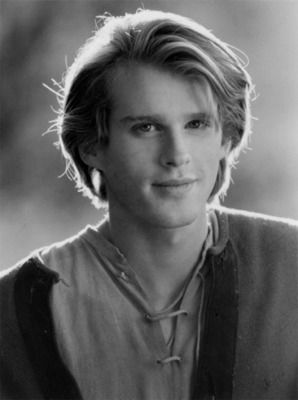
8. Westley, The Princess Bride by William Goldman
 Most people have only seen the movie, but the movie does a good job of adapting into the book. Now, I don't know why he loves a empty-headed girl like Buttercup (you know what I mean if you've read this book) but that doesn't stop him from making my list. I mean, everything he does for her, plus the fact that he's cunning and a great fighter, as well as hilarious? Totally deserving of my top ten.
9. Gilbert Blythe, Anne of Green Gables series by L.M. Montgomery
It is the sweetest thing watching Gilbert trying in his boyish ways to win Anne over, and then maturing into a young man. You can't help but cheer him on as he tries to make Anne realize how they're meant to be together. He's smart and good, with a wonderful story arc to him through the series.
10. William, No Shame, No Fear by Ann Turnbull
William makes it in it not just because of how much he loves Susanna, but because the growth he experiences in this book is very admirable. He is able to go from being a wealthy merchant to listening to his heart and coming to a religion which was widely persecuted and still stays strong.
Well, I certainly learned something through all of this. I like the old-fashioned boys. This is just my personal preference, but I think that there is still something underlining all of these heroes which is the fact that when it comes to love interests, he needs more dimensions than just the girl. Of course, I think that the stronger the love for the girl the better (not sappy, just strong), but he needs to be able to stand on his own as a character as well.
Who are some of your favorite love interests? What about them draws you in?
1. Peeta Mellark, The Hunger Games Trilogy by Suzanne Collins
You know how I've made it clear that in these, I just can't bear ranking these people? Not so with Peeta. He is my number one. I love this boy to death, and not just for the surface layer of his character. I love his contradictions, how he is the most moral character and yet the best liar, how he can be so in love with Katniss but strong enough to put her in her place. I love him for his own special strength and his tender heart And I love his character arc. Yes, I mean all of it, even in Mockingjay. I simply can't put it down how much this character amazes me to no end.
2. Mr. Fitzwilliam Darcy, Pride and Prejudice by Jane Austen

3. Char (Prince Charmont), Ella Enchanted by Gail Carson Levine
My first book crush. I think for him, it's his connection with Ella that makes him so great (as the only time he's in the book is when Ella is, as well). He definitely has his flaws as he points out, but his willingness to love and just be what a prince ought to be makes him a memorable love interest.
4. Captain Frederick Wentworth, Persuasion by Jane Austen
He is the most human of all of the Austen men, in my opinion. He is hurt from Anne's breaking off the engagement and acts just as a snubbed man would, but his feelings run deeper than that, and his undeniable love for Anne make him stand out. And who doesn't love a guy in a uniform?
5. Tamani, Wings Series by Aprilynne Pike
Tamani isn't usually the type of love interest that catches me, but ultimately, his loyalty is what drives me in. His duty to Avalon, his loyalty to Laurel, the fact that he waited so long for her and is willing to do anything for her is astounding. He's tough and sly, but also caring when you get to his core.
6. Mr. George Knightley, Emma by Jane Austen

7. Almanzo Wilder, Little House on the Prairie series by Laura Ingalls Wilder
Am I allowed to have real-life guys on my top ten love interests? Well, if not, I don't care! More props to him because he was real. Kind and brave, he was a man to be admired because of how much he respected Laura. He loved her for her strength and didn't disagree when she said that in their vows, she could not say that she would obey him. He's the kind of man we all hope to marry.
8. Westley, The Princess Bride by William Goldman
9. Gilbert Blythe, Anne of Green Gables series by L.M. Montgomery
It is the sweetest thing watching Gilbert trying in his boyish ways to win Anne over, and then maturing into a young man. You can't help but cheer him on as he tries to make Anne realize how they're meant to be together. He's smart and good, with a wonderful story arc to him through the series.
10. William, No Shame, No Fear by Ann Turnbull
William makes it in it not just because of how much he loves Susanna, but because the growth he experiences in this book is very admirable. He is able to go from being a wealthy merchant to listening to his heart and coming to a religion which was widely persecuted and still stays strong.
Well, I certainly learned something through all of this. I like the old-fashioned boys. This is just my personal preference, but I think that there is still something underlining all of these heroes which is the fact that when it comes to love interests, he needs more dimensions than just the girl. Of course, I think that the stronger the love for the girl the better (not sappy, just strong), but he needs to be able to stand on his own as a character as well.
Who are some of your favorite love interests? What about them draws you in?
Tuesday, May 31, 2011
My Top 10 Villians
Welcome to this week's My Top 10. Right now we are tackling those guys we love to hate, the villains *cue evil laugh*
Like I said for the protagonists, I have a hard time ranking and it just gives me a headache and a jumble of a list. And so, in no particular order, the villains:
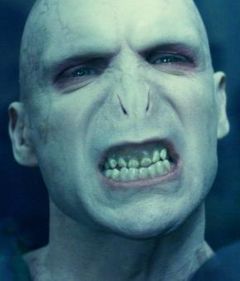
1. Lord Voldemort, Harry Potter books by J.K. Rowling
 First, did you know that the reason why Voldemort can't love is because he was conceived under the influence of love potion? It's true. And this is one of the reasons why he makes it into my top ten. Rowling gives Voldemort real reason to be evil, delving into his psyche and past. And it's not some lame one-dimensional reason. It's rich and thorough and amazing. His coldness and brutality (and lack of a nose) makes him truly frightening, as well.
2. President Alma Coin, The Hunger Games trilogy by Suzanne Collins
So you read Catching Fire and expect District 13 to be a warm fuzzy utopia, right? With plenty of food and love for the rest of Panem? WRONG. Enter in President Coin. You're suspicious of her at first, you don't know whether or not to trust her, but hey, she's taking down Snow, right? Yeah, sure, while also willing to do things that are just pure evil and yet some may debate that they weren't. For the gray area which surrounds Coin, I present her into my top ten. Because in real life, pure evil is rare. And Coin isn't pure evil, but that doesn't make her to be a weak villain. In fact, it makes her stronger.
3. Vaughn Ashby, Wither by Lauren Destefano
Keeping dead bodies in your basement? Forcing three girls to marry your son? Using babies as experiments? Yeah, this guy definitely makes it into the top ten. His ideals and what he does, the threats he uses to get these girls to do what he says makes for a sickening, although realistic, villain.
4. Iago, Othello by William Shakespeare
 Oh, Iago. This deluded and crazed man is an absolute terror! How devote he is to ending Othello and everyone who he believes did him wrong makes for an amazing drama as it unfolds, his layers are overwhelming. His brilliance and his determination make him the most fascinating character in the entire play.
5. Valentine, The Mortal Instruments series by Cassandra Clare
Now, for this series overall, I'm lukewarm about. But Valentine is an excellent villain because he skews what is wrong into good, and even at times I questioned whether he was really the bad guy. In the end, doesn't that make him a scary good villain?
6. The White Witch, The Lion, the Witch, and the Wardrobe by C.S. Lewis
Anyone who dumps snow on me and takes away Christmas is just plain mean. Her manipulations and cold-heart as well as her persistence to stay queen lands the White Witch on my list.
7. President Snow, The Hunger Games Trilogy by Suzanne Collins
I tried to avoid having another villain from the same series again, but I couldn't leave Snow out of here. The man who began the Hunger Games, I mean really, how can he not make my list? I find the most chilling part about his character is how honest he is, how he lets Katniss know right away she's being watched. And oh my gosh, what he did to the victors? He's awful. But the fact that he wasn't so evil as to be "wasteful" as he put it, again makes him realistic.
8. Capricorn, Inkheart by Cornelia Funke
 Gah Capricorn! He burns books! That in and of itself is evil! He scared me so much in middle school when I first read this book, how just plain determined he was to take over our world, how fascinated he was by our weapons. Evil, evil.
9. Nellie Olsen, The Little House books by Laura Ingalls Wilder
I almost feel silly putting her down, but not all villains are out to murder people or take over the world. Nellie is the type of villain you see every day. She's selfish and stuck-up, and she tries to steal people's beaus. And she takes their candy and teases them. I absolutely detested Nellie.
10. Hattie, Ella Enchanted by Gail Carson Levine
More like Nellie than Voldemort, but still so awful. She's stupid, but not quite as much as you'd think, and she manipulates Ella for her own gain. She's selfish and horrible, attempting for nothing more than her own desires.
Villains. Without them, the story would be a snore. They're as diverse as our protagonists, but I find there to be one serious difference: their flaws outweigh their virtues, whereas the opposite is true for the protagonist.
Who are some of your top villains? What is it about them that makes them so evil to you?
Like I said for the protagonists, I have a hard time ranking and it just gives me a headache and a jumble of a list. And so, in no particular order, the villains:
1. Lord Voldemort, Harry Potter books by J.K. Rowling
2. President Alma Coin, The Hunger Games trilogy by Suzanne Collins
So you read Catching Fire and expect District 13 to be a warm fuzzy utopia, right? With plenty of food and love for the rest of Panem? WRONG. Enter in President Coin. You're suspicious of her at first, you don't know whether or not to trust her, but hey, she's taking down Snow, right? Yeah, sure, while also willing to do things that are just pure evil and yet some may debate that they weren't. For the gray area which surrounds Coin, I present her into my top ten. Because in real life, pure evil is rare. And Coin isn't pure evil, but that doesn't make her to be a weak villain. In fact, it makes her stronger.
3. Vaughn Ashby, Wither by Lauren Destefano
Keeping dead bodies in your basement? Forcing three girls to marry your son? Using babies as experiments? Yeah, this guy definitely makes it into the top ten. His ideals and what he does, the threats he uses to get these girls to do what he says makes for a sickening, although realistic, villain.
4. Iago, Othello by William Shakespeare
5. Valentine, The Mortal Instruments series by Cassandra Clare
Now, for this series overall, I'm lukewarm about. But Valentine is an excellent villain because he skews what is wrong into good, and even at times I questioned whether he was really the bad guy. In the end, doesn't that make him a scary good villain?
6. The White Witch, The Lion, the Witch, and the Wardrobe by C.S. Lewis
Anyone who dumps snow on me and takes away Christmas is just plain mean. Her manipulations and cold-heart as well as her persistence to stay queen lands the White Witch on my list.
7. President Snow, The Hunger Games Trilogy by Suzanne Collins
I tried to avoid having another villain from the same series again, but I couldn't leave Snow out of here. The man who began the Hunger Games, I mean really, how can he not make my list? I find the most chilling part about his character is how honest he is, how he lets Katniss know right away she's being watched. And oh my gosh, what he did to the victors? He's awful. But the fact that he wasn't so evil as to be "wasteful" as he put it, again makes him realistic.
8. Capricorn, Inkheart by Cornelia Funke

9. Nellie Olsen, The Little House books by Laura Ingalls Wilder
I almost feel silly putting her down, but not all villains are out to murder people or take over the world. Nellie is the type of villain you see every day. She's selfish and stuck-up, and she tries to steal people's beaus. And she takes their candy and teases them. I absolutely detested Nellie.
10. Hattie, Ella Enchanted by Gail Carson Levine
More like Nellie than Voldemort, but still so awful. She's stupid, but not quite as much as you'd think, and she manipulates Ella for her own gain. She's selfish and horrible, attempting for nothing more than her own desires.
Villains. Without them, the story would be a snore. They're as diverse as our protagonists, but I find there to be one serious difference: their flaws outweigh their virtues, whereas the opposite is true for the protagonist.
Who are some of your top villains? What is it about them that makes them so evil to you?
Thursday, May 26, 2011
Telling that little voice to "Shut up!"
When I was younger, I was so oblivious to how bad of a writer I was. I bubbled with how great I thought my writing and stories were, and so confident about them. I've improved a ton on my writing as I've gotten older, but with improving writing, so comes the knowledge of what is good and what isn't. As I go along in my WIP now, sometimes that little voice pops up, "This doesn't make any sense. No one would want to read this. Sure you got the idea, but the execution is horrible."
Ihope think that the voice is partially wrong. "It's a first-draft," I say to the degrading voice. "I know it has flaws, but I'll improve it come editing! Just SHUT UP and let me write!"
I really think at this point, it's all I can do. Just telling that voice to shut up. In the book on writing by Gail Carson Levine, Writing Magic, she talked about having this voice in her head, too. And considering she wrote my favorite childhood novel Ella Enchanted I'm not taking this as a bad sign. I'm taking it, in a way, as a good sign. That first, I can recognize the weak points in my writing and improve them. And second, that the mean voice isn't always right. It's just being critical at times with no purpose to it.
Do you get this same little voice in your head? What do you do about it?
I
I really think at this point, it's all I can do. Just telling that voice to shut up. In the book on writing by Gail Carson Levine, Writing Magic, she talked about having this voice in her head, too. And considering she wrote my favorite childhood novel Ella Enchanted I'm not taking this as a bad sign. I'm taking it, in a way, as a good sign. That first, I can recognize the weak points in my writing and improve them. And second, that the mean voice isn't always right. It's just being critical at times with no purpose to it.
Do you get this same little voice in your head? What do you do about it?
Tuesday, May 24, 2011
My Top 10 Protagonists
And so begins a series of My Top 10's. Because if we're going to write great books, we need to look at the best and pick out ideas of how to emulate the greatness, right?
Now, I am horrible at ranking things I love (especially books and everything in them) and so this is list is not at all made up as a rank. I can't choose between all of these protagonists, I just can't.
1. Katniss Everdeen, The Hunger Games Trilogy by Suzanne Collins
 Ok, does this picture make anyone else want to absolutely freak out?! Anyway. Katniss. This girl is amazing. And I mean besides the obvious toughness of her, and her fierce love for those who manage to wiggle their way into her heart. She has a strength that is rare in other heroines. To me, it seems whenever a heroine is strong it's to prove to men that women are strong. Katniss does it because she just is that way, she has no one to prove it to. And her story arc is phenomenal. She had my heart and my cheers the entire time.
2. Harry Potter, Harry Potter series by J.K. Rowling
I think what makes Harry so great is that you essentially grow up with him. And I love seeing the growth of his character, and what is a huge part of making him one of my top protagonists. But beside this, he is very real to me, with his flaws (Order of the Phoenix anyone?) and his overwhelming courage. The struggles and doubts he has in the last book, but still persevering is something to admire.
3. Ella of Frell, Ella Enchanted by Gail Carson Levine
This is my first heroine. She was strong-willed, which made her struggles even more aggravating and made me want her happy ending so badly. She was smart and quick, and most important, willing to sacrifice for those she loved.
4. Elizabeth Bennet, Pride and Prejudice by Jane Austen
 How can you not love the genteel snark on this girl? Many a chick flick try to find a heroine who captures Lizzy's wit and match it with their own sad version of Mr. Darcy, and all have failed. Being in society while also going against it in her own special, subtle way makes Elizabeth one heck of a heroine. She learns more about herself through her mistakes, flaws that are also toned down and more realistic than some tragic flaw.
6. Evie, Paranormalcy by Kiersten White
This girl felt so real to me. Her desires and dreams, her attitude, everything felt true and realistic. The fact that she kicks butt doesn't hurt her, either. She was just this teenage girl that I could sympathize with and cheer for the entire time.
7.Anne Elliot, Persuasion by Jane Austen
Love this girl, maybe because I see so much of myself in her (egotistical much?...maybe a bit). One of Jane Austen's least regarded heroines, but an amazing protagonist. She is of a quieter kind, but her loyalty is stronger than anything. Wise, and good-hearted, she's just the type of person you want so badly to have a happy ending.
8. Anne Shirley, Anne of Green Gables (and other sequels) by L.M. Montgomery

10. Julianna Baker, Flipped by Wendelin Van Draanen
I absolutely love this character arc. I love the growth this girl goes through, I love seeing her free spirit and liveliness, of coming aware of her own feelings and the world around her. The fact that she is the only character from a contemporary book on this list says it for itself--her character is simply awesome.
A few things I've noticed: Harry is the only male on this list, probably partly because I don't read a whole lot of books with male protagonists, and females resonate with me more anyway. But more along the sides of writing, I find that a lot of these characters are strong-willed, but still struggle with internal dilemmas and the world around them. They also have obvious flaws, but they make up for it through their other traits.
What about you? Who are some of your favorite protagonists and why?
Now, I am horrible at ranking things I love (especially books and everything in them) and so this is list is not at all made up as a rank. I can't choose between all of these protagonists, I just can't.
1. Katniss Everdeen, The Hunger Games Trilogy by Suzanne Collins

2. Harry Potter, Harry Potter series by J.K. Rowling
I think what makes Harry so great is that you essentially grow up with him. And I love seeing the growth of his character, and what is a huge part of making him one of my top protagonists. But beside this, he is very real to me, with his flaws (Order of the Phoenix anyone?) and his overwhelming courage. The struggles and doubts he has in the last book, but still persevering is something to admire.
3. Ella of Frell, Ella Enchanted by Gail Carson Levine
This is my first heroine. She was strong-willed, which made her struggles even more aggravating and made me want her happy ending so badly. She was smart and quick, and most important, willing to sacrifice for those she loved.
4. Elizabeth Bennet, Pride and Prejudice by Jane Austen

6. Evie, Paranormalcy by Kiersten White
This girl felt so real to me. Her desires and dreams, her attitude, everything felt true and realistic. The fact that she kicks butt doesn't hurt her, either. She was just this teenage girl that I could sympathize with and cheer for the entire time.
7.Anne Elliot, Persuasion by Jane Austen
Love this girl, maybe because I see so much of myself in her (egotistical much?...maybe a bit). One of Jane Austen's least regarded heroines, but an amazing protagonist. She is of a quieter kind, but her loyalty is stronger than anything. Wise, and good-hearted, she's just the type of person you want so badly to have a happy ending.
8. Anne Shirley, Anne of Green Gables (and other sequels) by L.M. Montgomery

I love this girl's imagination and dreams. She's so driven, with a flare inside of her. I mean, who doesn't cheer inside when she breaks that slate over Gilbert's head? She wants to be loved, like everyone, and her ultimate dreams (while often carried away) are things that deep down, we all want, too.
9. Tally Youngblood, Uglies series by Scott Westerfield
Tally's sense of adventure, her desire to be included, but also doubting that which would make her included had me from the beginning. I loved her strength as well as her struggles, and the story arc of everything society did to her was absolutely heart-breaking.10. Julianna Baker, Flipped by Wendelin Van Draanen
I absolutely love this character arc. I love the growth this girl goes through, I love seeing her free spirit and liveliness, of coming aware of her own feelings and the world around her. The fact that she is the only character from a contemporary book on this list says it for itself--her character is simply awesome.
A few things I've noticed: Harry is the only male on this list, probably partly because I don't read a whole lot of books with male protagonists, and females resonate with me more anyway. But more along the sides of writing, I find that a lot of these characters are strong-willed, but still struggle with internal dilemmas and the world around them. They also have obvious flaws, but they make up for it through their other traits.
What about you? Who are some of your favorite protagonists and why?
Subscribe to:
Posts (Atom)